Official site: SnowX SnowPod product page
I do own a 3D printer. But for me it’s still a tool for mock-ups, for checking shapes. When something I wanted in metal comes out in resin, it never feels finished, and the layer lines bother me. I wrote about that in my titanium keycaps article (Japanese).
So a small metal 3D printer that makes shapes out of metal itself is interesting to me. If I could make the same kind of things I make in resin, but in metal, I’d consider it. Mesh-like lattices in particular are hard to make on a CNC.
To be honest, though, a CNC would cover most of what I want to make. What would make me want this printer anyway is being able to make its material myself, from the chips my CNC produces. If I could do that, I’d really want one!
The SnowPod is a machine that prints from 316L stainless steel powder loaded in cartridges. SnowX official site
I have not bought or used the SnowPod. This is pre-purchase research based on public sources checked on September 22, 2026 and re-checked on October 3. The figures are published by the maker, material suppliers and researchers. I have not confirmed that the SnowPod gets the same results.
A ring in 30 minutes, a gear in 6 hours
SnowX lists print times and material usage for the following examples. They help you get a sense of what size of work the machine handles.
| Official example | Listed time | Listed material usage |
|---|---|---|
| Openwork ring | 0.5 h | 3.1 g |
| Openwork bracelet | 2 h | 29.85 g |
| Gear | 6 h | 167.56 g |
Source: SnowX official site, “Professional Parts. Minimal Input.”. All figures are the maker’s own. It doesn’t say whether the material usage includes supports or powder that can’t be recovered, or whether the time includes preparation, cooling and finishing. So you can’t read this as “a wearable ring in 30 minutes.”

Image quoted from SnowX. Not edited.
Openwork rings and bracelets are exactly the kind of lattice shapes that are hard to make on a CNC. This is what I’m hoping a metal 3D printer can do.
The build volume is 80 × 80 × 100 mm. It isn’t a machine for printing a large case in one piece; it’s sized for small items and parts that fit inside that space. SnowX official site
It isn’t on sale yet. A maker-written introduction (a sponsored article published on September 16, 2026) gives the planned Kickstarter launch as Q4 2026. SnowX’s product introduction
Chips can’t go in as they are
The shapes it can make look promising. What I want to know next is how to get the material. For me, that means: can I use chips from a CNC?
As I wrote in my C500 article (Japanese), back when I used machines at technical college, I really didn’t like chips. They’re dangerous, they make a mess, and cleaning up is a chore. If they could turn back into the next batch of material, I’d see them very differently.
The short answer first: SnowX doesn’t describe the SnowPod as a product that takes chips directly and recycles them. SnowX official site The reason is the shape of the powder it uses.
Printing powder has controlled particle size and shape
The SnowPod spreads a thin layer of metal powder, melts only the parts it needs with a laser, and builds the shape layer by layer. This method is called SLM. NIST’s explanation of additive manufacturing
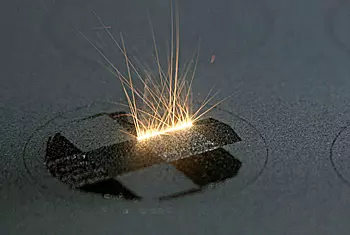
Photo: Beamie Young / NIST (terms of use). Not edited. Published by NIST without warranty.
Because the powder is spread in thin layers, the material needs controlled particle size, shape and flow, not just the right composition. NIST also treats particle size, shape and chemical composition as part of quality control for printing materials. NIST on evaluating powder materials
For example, Daido Steel’s SUS316L powder for printing is 25–53 µm for SLM. It is supplied as round particles made by gas atomization, where molten metal is broken into fine droplets with gas. Daido Steel, SUS316L
Chips straight from machining come in every shape and size. Carpenter’s 316L datasheet also notes that 316L makes tough, stringy chips when machined. PowderRange 316L datasheet (PDF) Even though it’s the same 316L, it’s a different thing from printing powder.
More on particle size and how the powder is made
Besides the 25–53 µm grade for SLM, Daido Steel’s SUS316L powder also comes in a 53–150 µm grade for DED, a different method. Both are spherical powders made by gas atomization. Daido Steel, SUS316L
These particle sizes are not SnowPod specifications. They’re a reminder not to assume powders are interchangeable just because they share the name 316L.
Through a powder maker, chips can be remade
There are businesses that turn chips into printing powder. 6K Additive in the US says it makes spherical powder from feedstock such as certified CNC millings, grindings, used powder, failed builds and support material. It lists 316L among its products. 6K Additive, About / 6K Additive, metal powders
It also accepts scrap and used powder. 6K Additive, revert feedstock
Collect the chips → remake them into printing powder and control the quality → use it as material that fits the machine. The middle step is the job of a material maker.
How 6K Additive makes its powder
It spheroidizes powder with its UniMelt® microwave plasma process. 6K Additive, About It also tests composition and powder properties and controls lots. 6K Additive, metal powders and production
So the idea of reusing chips isn’t a fantasy. But what 6K lists as feedstock is certified chips. I couldn’t find out whether an individual in Japan could send a small amount of chips and get SnowPod powder back. Recycled powder existing in the world, and cycling material at home, are two different things.
Is it better for the environment than a CNC?
A recovery rate alone doesn’t show it’s better than a CNC. You’d need to compare the same part made under the same conditions, including powder production, printing power and gas, post-processing and shipping. The sources I looked at had no such comparison for the SnowPod.
The material is 316L powder. How much does it cost?
Since chips can’t be used as they are, for now you’d be buying powder. The machine itself probably won’t be cheap either, so I think whether materials can be bought cheaply is the key.
Stainless steel only. No titanium
The material the SnowPod uses is a stainless steel called 316L. Material suppliers list corrosion resistance and toughness as its strengths, but that describes the material, not test results for parts printed on the SnowPod. PowderRange 316L datasheet (PDF)
What I want to make most is titanium keycaps, so the SnowPod can’t make those. 316L alone also won’t help anyone who wants light aluminum parts. It’s a machine to consider if there’s something you want to make in stainless steel.
316L composition
316L is a low-carbon austenitic stainless steel. Carpenter Additive’s 316L powder, for example, is mainly iron, with a composition range of 16–18% chromium, 10–14% nickel and 2–3% molybdenum. PowderRange 316L datasheet (PDF)
Commercial powder: one example is USD 670 for 10 kg
316L powder is available in Japan and abroad. Here are the sellers and suppliers I looked at.
| Supplier | Powder and unit listed | Price and terms |
|---|---|---|
| Daido Steel | SUS316L, e.g. 25–53 µm for SLM | Says it handles small lots. Minimum quantity, unit price and sales to individuals need checking |
| Additive Plus | Carpenter PowderRange 316L, 15–45 µm, 10 kg | Listed at USD 670 (USD 665 on September 22). Shipping, taxes and delivery to Japan need checking separately |
| UPM Advanced Solutions | PowderRange 316L for laser powder bed fusion (LPBF), 15–45 µm, 10 kg bottle | Price shown after login |
Sources: Daido Steel, Additive Plus product page, UPM product page. Checked September 22, 2026 and re-checked October 3. None of these has been confirmed to work in the SnowPod.
At USD 670 for 10 kg, that’s USD 67 per kg. The seller’s page also says prices change with market and stock. You can’t buy just 1 kg at the same unit price either, so even if you only want to make a small ring, you need to think about the amount you’d buy up front and what you’d pay.
Whether it works in the SnowPod is still unknown
The part I want to know about is the SnowPod’s cartridge. Can you fill it with commercial powder yourself, or do you swap in factory-filled refills? If you use another brand’s material, are there required powder specs, print settings or warranty conditions? I couldn’t find this in public sources.
That means commercial prices can’t be used directly as the SnowPod’s material cost. I also couldn’t confirm a way for an individual in Japan to keep buying refills.
I don’t know what the ring’s “3.1 g” includes, either, so I won’t multiply it by a powder price and call that the cost. Working out the cost per part would need the price and amount of official material, and a breakdown of the part, supports and powder that couldn’t be recovered.
How much leftover powder can be reused?
If you have to buy powder, the next thing that matters is how much of it you can use without waste. Throwing it all out every time would make material costs much heavier. The SnowPod has a system for recovering powder that wasn’t melted during printing, and claims a recovery rate of over 90% per cycle. SnowX official site, powder recovery
Only unmelted powder is recovered. Finished parts and supports can’t be turned back into powder. The maker’s introduction also says recovery efficiency varies with geometry, so I’d like to know what the rate is measured against, what shapes were tested, and over how many cycles. SnowX on powder recovery
So can reused powder still make good parts? I found two studies.
- 2017 study: after reusing 316L powder 12 times, strength and elongation showed no trend of changing in one direction with the number of reuses. Sartin et al., “316L Powder Reuse for Metal Additive Manufacturing” (PDF), pp. 1, 5, 9
- 2024 study: on the surface of reused 316L powder, oxygen increased and the oxide layer changed. Chalmers, research summary
In short, there’s a track record of reuse, but recovered powder can’t be treated the same as new powder. The 2017 results came with sieving and controlled equipment, so they don’t mean the SnowPod can reuse powder 12 times. What I’d want to know for the SnowPod is how it sieves, how it mixes in new powder, how it tracks usage history, and when it discards powder.
More on the two studies
The 2017 study used a single 500 kg lot of 316L powder on a Renishaw AM250 and followed it through 12 reuse cycles and 31 builds. The powder was sieved between cycles, and 380 powder samples and 118 tensile specimens, among others, were examined. Some specimens showed low strength or elongation, which the authors attributed to variation in the machine and process.
The 2024 study examined the powder surface with electron microscopy and X-ray photoelectron spectroscopy. This is based on the researchers’ published summary, so it doesn’t tell us how much strength drops or how many times the powder can be used.
Finishing, and how the parts perform
Even with material sorted out, whether I get what I want depends on the parts that come out.
What I’d like to make in 316L is an Apple Watch band and screws. A resin 3D printer can make them too, but I personally prefer the feel of metal, and for parts like screws I’ve had doubts about strength. Metal should help with that.
On the other hand, it still builds in layers. How much the layer lines differ from a filament resin printer is what worries me.
The official examples were post-processed too
SnowX notes that its official examples were post-processed for display. It also recommends basic tools such as pliers for removing supports. SnowX official site, notes on examples and supports
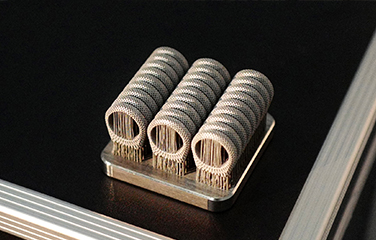
Image quoted from SnowX. Not edited.
From photos alone, you can’t tell where the printer’s output ends and polishing or extra machining begins. Seeing the same example straight after printing and after finishing, with the work in between, would show the effort to a finished part better than anything.
Read the accuracy and strength figures carefully
The maker’s layer thickness of 30–60 µm is the thickness of each layer, and the laser spot of about 40 µm is the size of the beam’s spot. Neither tells you how far a part’s dimensions will be off. SnowX on optics and layer settings
The official site also lists “0.01 mm dimensional accuracy.” But I couldn’t find inspection data showing what shape was measured and where. That number alone doesn’t mean shaft holes or threads will come out within 10 µm. SnowX official site, accuracy claim
I couldn’t find strength data for SnowPod-printed parts either. Since I want to make parts that take load, like screws and bands, I can’t fit it into my work unless I can trust the strength.
What conditions come with strength data (an example from another company)
Carpenter’s 316L datasheet gives typical tensile strengths, as built and before heat treatment, of 703 MPa in the XY direction and 655 MPa in Z. These are from testing to ASTM E8/E8M-16a, with at least 5 specimens per direction and heat-treatment condition. Even for the same material name, figures come with the build direction and conditions. PowderRange 316L (PDF), p. 5
This is not the SnowPod’s strength. Accuracy figures, too, can only be compared once build direction, post-processing and the number of samples are given.
Equipment and cost for using it at home
Even if the parts are usable, whether you can keep it running at home is another question. The SnowPod itself is listed at 360 × 360 × 660 mm (W × D × H). But it’s used together with the NitroPod, which supplies nitrogen. The NitroPod is introduced as an accessory that extracts nitrogen from the air. SnowX on the machine and NitroPod
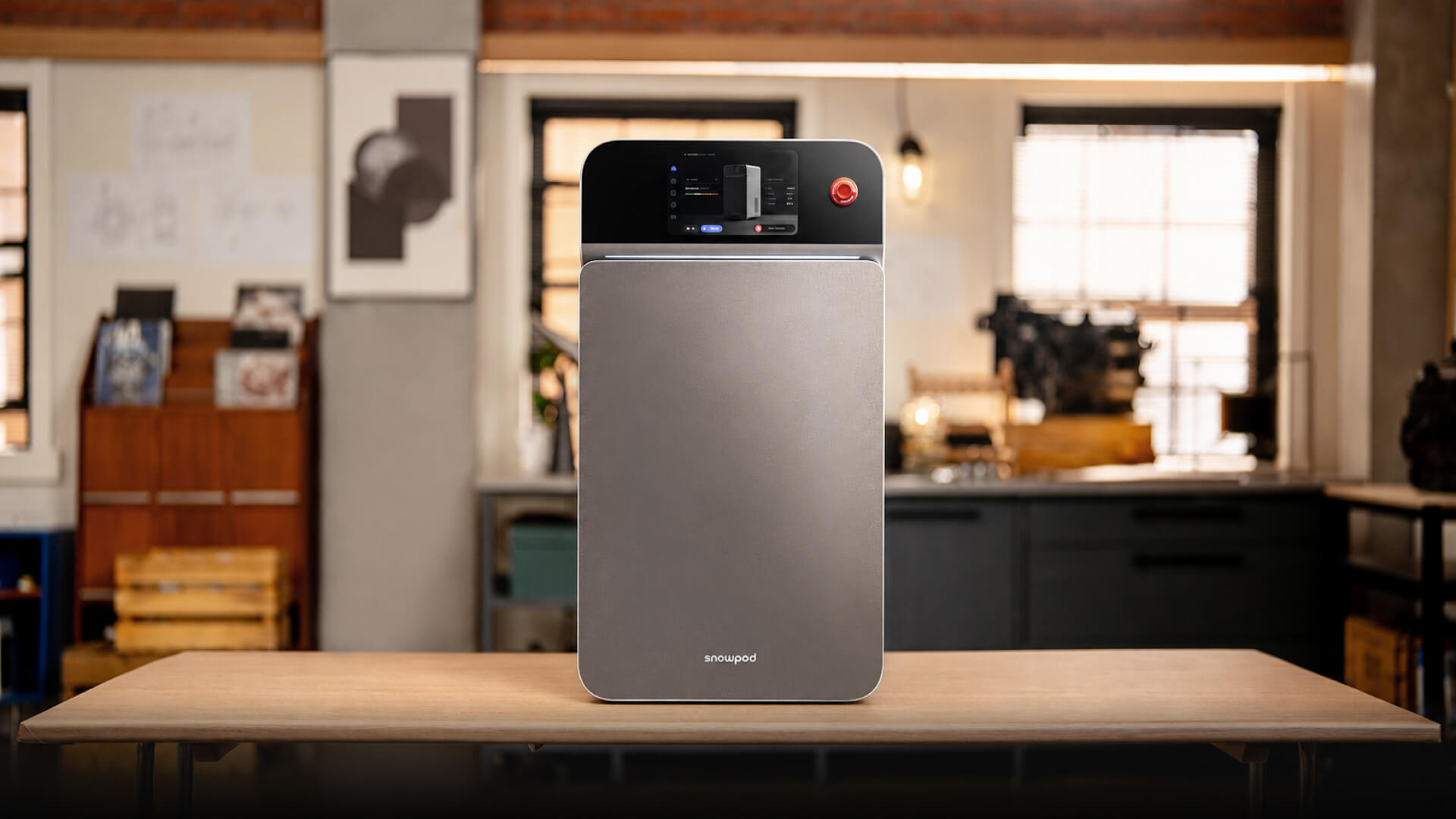
Image quoted from SnowX. Not edited.
Handling the powder worries me most
The US NIOSH lists tasks in metal powder 3D printing with higher potential for exposure: loading powder by hand, sieving outside the machine, removing and moving powder, and changing filters. These are distinguished from monitoring an enclosed print. The same document also lists static electricity, fire and explosion as hazards, alongside breathing in powder and skin contact. It covers metal powder printing in general and is not a test of the SnowPod. NIOSH, 3D printing with metal powders (one-page PDF)
Whether it’s usable at home is something I’d judge from the maker’s procedures from removing parts to cleaning, the safety data sheet for the specified powder, and the requirements for ventilation, protective equipment and maintenance. “Sealed cartridge” alone isn’t enough to say it’s fine in a living space.
The total cost can’t be worked out yet
The cost should include the machine and NitroPod, the first batch of material, refills, maintenance consumables and whatever finishing takes. I couldn’t find the price of the machine set or official material, and shipping and warranty for Japan aren’t settled either. How much it costs to get started, and whether it’s cheaper than a CNC or outsourcing, can’t be said yet.
To compare, I’d pick one part, like the official gear example. With the same drawing, material, tolerances, surface finish and quantity, work out the cost from printing through extra machining and inspection. Only by comparing that with the cost of finishing the same part on a CNC or through outsourcing can you choose a method.
What I’m hoping for from the SnowPod
Having looked into it, my take for now is that the shapes it can make are promising, while a lot about materials, finishing and cost is still unknown.
Keycaps, keyboard parts, watches, an Apple Watch band, screws. There’s still so much I want to make in metal.
I’m not planning to buy a SnowPod right now. But if I could trust the strength and fit it into my work, that would change. Being able to reuse leftover powder also matters in practice.
Beyond that, I’d need to be able to keep buying materials cheaply, and to know the work and cost to reach the finish I want. And if someday I could make this printer’s material from my CNC chips, I’d seriously want one!